- Clinica Veterinaria Eurovet - Avenida Estación, 38 - 12598 - Peñiscola
- +34 964 784 983
- +34 671 281 025
- clinica.eurovet@gmail.com



Preventing with Diet and an Adapted Environment
Osteoarthritis is not exclusive to old dogs or cats: it’s the result of years of small wear and tear, poor nutrition, excess weight, or routines that aren’t well adapted. It doesn’t appear overnight but develops slowly and quietly until one day we realize our dog no longer runs the same, or our cat avoids climbing.
The good news is that osteoarthritis can be prevented and slowed down—as long as we act in time on the risk factors. Three fundamental pillars come into play here: nutrition, environmental management, and the use of complementary therapies that go far beyond medication.
Weight Management: Breaking the Vicious Circle
In osteoarthritis, there’s a vicious cycle: pain reduces activity, leading to muscle loss and often weight gain. That excess weight, in turn, puts more pressure on the damaged joints, worsening pain and speeding up deterioration.
That’s why body weight control is the most powerful tool we have.
An animal with osteoarthritis should maintain its ideal weight, or even 10% below that in advanced cases, because every extra kilo multiplies joint damage.
Each kilo lost can mean a 20–30% reduction in joint pain.
It’s worth it!
But how do we know what the ideal weight is?
A good reference is the weight your pet had around 11 months of age, perhaps before sterilization.
A more precise yet practical method is the Body Condition Score (BCS), which evaluates fat stores by palpating the ribs, waist, and base of the tail.
On a 1–9 scale, the ideal score is typically 4–5: ribs should be easy to feel but not visible, and the waist should be noticeable from above.
Weight control is key to preventing and managing osteoarthritis.
At Eurovet, you can weigh your pet for free anytime, and we also design personalized weight-control plans, especially useful for young animals at orthopedic risk.
Ask your veterinarian: a few kilos less today can mean years of healthy joints tomorrow.
Have your pet’s BCS checked at least twice a year—detecting small deviations early is key to preventing obesity and silent joint deterioration.
The Key: Moderate Exercise and an Adapted Home
Neither endless time on the sofa nor marathon running: exercise is essential, but it must be moderate and adapted.
Gentle, daily, and tailored activity is one of the best ways to maintain functional joints.
Prolonged immobility promotes stiffness and reduces synovial fluid production, while excessive or high-impact activity can damage otherwise healthy structures.
Ideally, keep a consistent activity level with regular, calm, and moderately long walks for dogs.
For cats, encourage movement through gentle play and by adapting the environment with scratching posts or easy-to-climb structures.
The goal isn’t to break records but to keep the joints moving, promoting joint lubrication, periarticular muscle strength, and overall support musculature.
Your veterinarian advises:
A common mistake we often see is trying to make up for inactivity with long weekend walks.
Short, frequent outings are much better!
In our clinic, we always say:
“Better 5 km a day than none at all—but even better 5 times 1 km spread throughout the day than 5 km all at once!”
In large-breed puppies, exercise must be even more regulated—avoid jumping, hard surfaces, and overexertion.
The home also plays a crucial role.
You don’t need a rehabilitation center to start recovery—your home can become a therapeutic space if adapted wisely.
Slippery floors can be replaced with non-slip rugs, high beds with ramps, and everyday obstacles with ergonomic access points.
For cats, encouraging safe vertical movement with shelves or climbing trees helps stimulate muscles without microtrauma.
For dogs, limiting repetitive jumps and continuous stair use is a protective measure, even from a young age.
Diet: Prevention and Therapy from the Bowl
Nutrition is a fundamental pillar, both to prevent osteoarthritis from appearing and to slow its progression once the disease has developed.
It’s not just about feeding “less so they don’t get fat,” but about understanding that diet influences metabolism, inflammation, and cartilage health.
For more information, read also:
ES – 005 – Geriatría – I.B.2 – Artrosis, Dietas para enfermedades articulares
(add backlink)
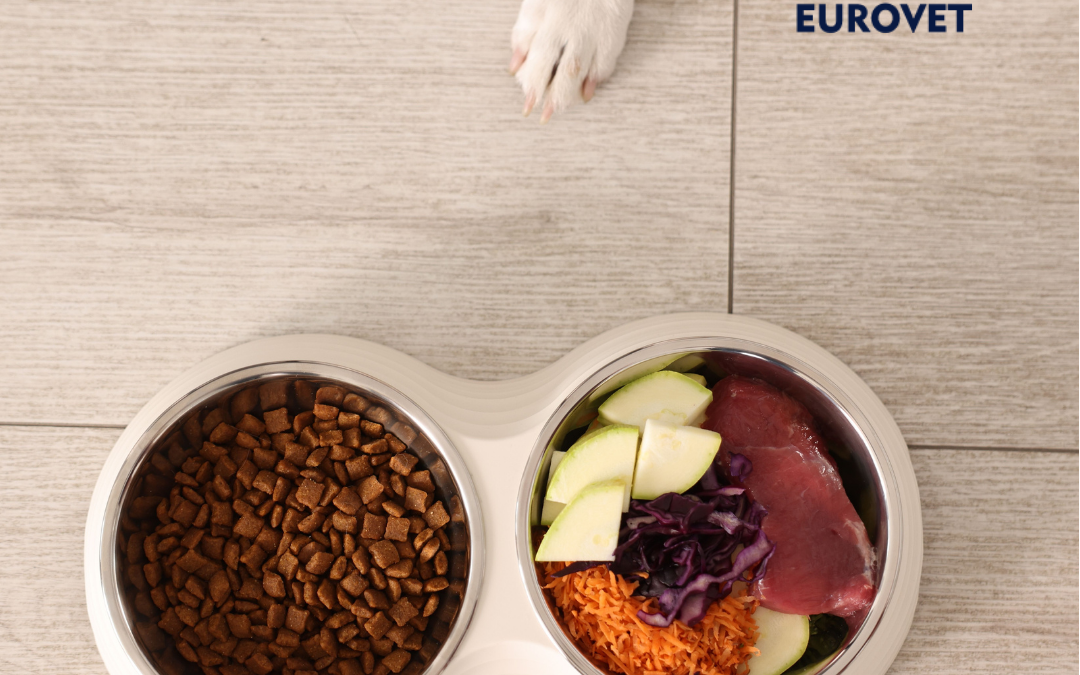
Prevention is better than cure, and that’s why for healthy animals, prevention starts in the bowl.
A balanced physiological diet meets energy and nutrient needs without creating excesses.
Puppies and kittens should receive food adapted to their rapid growth—overfeeding or overly caloric diets increase the risk of dysplasia or early-onset osteoarthritis.
In large and giant breeds, this is even more critical, as fast growth overloads immature joints.
Reducing “empty calories” and ensuring sufficient protein intake, especially in sterilized animals or those prone to overweight, is one of the most effective ways to prevent osteoarthritis without medication.
In adults, a well-balanced diet helps maintain ideal body weight.
Remember: obesity is the most significant modifiable risk factor in osteoarthritis.
A dog 20% overweight multiplies the pressure on its hips and knees, and an obese cat can triple joint stress with every jump.
Balanced diets also provide the right amounts of high-quality proteins, vitamins, and minerals, supporting cartilage and connective tissue integrity.
Premium foods often include specific nutrients that help prevent osteoarthritis, such as chondroprotectors and omega-3 fatty acids.
We can say that a good physiological diet is like joint insurance—you might not notice it day to day, but it makes a big difference in the long run.
When osteoarthritis is already diagnosed, or there’s a high risk (for example, in predisposed breeds or existing dysplasia), therapeutic diets come into play.
These diets not only control weight but also include functional nutrients that directly support joint health.
They generally have reduced energy density, allowing pets to eat a satisfying portion without excess calories—key to controlling obesity without frustration or food-seeking behavior.
They often include chondroprotectors like glucosamine and chondroitin sulfate, which stimulate cartilage matrix synthesis and slow its breakdown.
Many also contain omega-3 fatty acids (EPA and DHA) from fish oil, proven to have a powerful anti-inflammatory effect on joints.
Clinical studies in dogs have shown that omega-3-enriched diets reduce lameness in as little as 3 weeks and can lower the required dose of anti-inflammatories.
Some therapeutic formulas also include antioxidants like vitamin E and selenium, which neutralize free radicals generated by chronic inflammation.
Others incorporate hydrolyzed collagen or bioactive type II collagen peptides, which interact with the immune system to modulate inflammation and support cartilage repair.
Finally, many therapeutic diets are enriched with L-carnitine, which helps metabolize fat and preserve muscle mass during weight loss—a crucial factor since muscles are the best allies of the joints.
In summary, therapeutic diets are not just “light foods” or commercial fads—they are true clinical tools, effective in both prevention and management of pain and disease progression.
Rehabilitation: Non-Drug Therapies and Veterinary Physiotherapy
Veterinary physiotherapy has become a key pillar in the multimodal management of osteoarthritis.
Different techniques, used together, help improve mobility, reduce pain, and slow the progression of the disease.
• Massage therapy: the power of touch.
Therapeutic massage improves circulation, reduces muscle tension, and increases flexibility.
It also helps the animal relax, which reduces perceived pain.
•
• Kinesiotherapy: guided movement.
This involves passive and active mobility exercises directed by a veterinary physiotherapist.
These movements maintain joint flexibility, strengthen supportive muscles, and prevent atrophy.
•
• Hydrotherapy: healing through water.
The buoyancy of water reduces joint load, allowing pain-free movement.
Water-based exercise strengthens muscles and improves cardiovascular endurance—ideal for dogs with advanced osteoarthritis.
•
• Electrostimulation: active muscles without effort.
Low-intensity electrical impulses stimulate muscle contraction, helping to maintain muscle mass and strength in animals unable to exercise normally.
•
• Laser therapy: light against inflammation.
Laser photobiomodulation reduces inflammation, accelerates tissue repair, and provides pain relief.
It’s particularly useful during painful phases or after controlled exercise sessions.
•
Veterinary physiotherapy is much more than passive exercise—it’s an active approach aimed at improving musculoskeletal function.
By strengthening periarticular muscles, improving proprioception, and maintaining joint range of motion, rehabilitation enhances medical treatments and reduces the risk of relapse.
It should always be prescribed and supervised by a veterinarian trained in rehabilitation medicine.
Conclusion: A Comprehensive Approach for Better Quality of Life
Osteoarthritis isn’t defeated by medication alone but through a global strategy combining weight management, specific nutrition, adapted exercise, an appropriate environment, and supportive physical therapy.
Every small change helps break the vicious cycle of pain and immobility, giving our animals back their freedom, comfort, and dignity of movement.