- Clinica Veterinaria Eurovet - Avenida Estación, 38 - 12598 - Peñiscola
- +34 964 784 983
- +34 671 281 025
- clinica.eurovet@gmail.com



When age calls, metabolism answers (slowly)
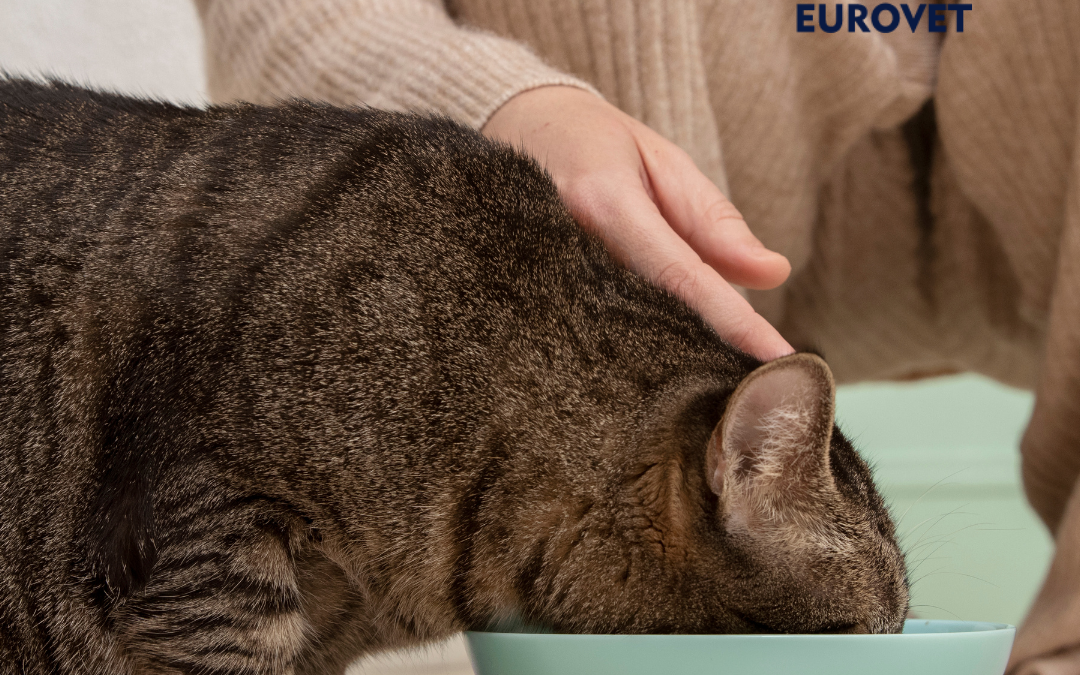
Your dog or cat used to run marathons around the garden. Now, if they stretch without cracking… it’s a lucky day! As pets get older, their metabolism takes a holiday and their activity level drops. But that doesn’t mean simply eating less. Good proteins are still essential to keep muscles strong and prevent them from turning into jelly.
Calories: neither all-you-can-eat nor intermittent fasting
Obesity is the silent enemy of senior pets. But be careful: putting them on a diet without supervision is risky – being slim is not the same as being malnourished. They need a tailor-made menu that considers their level of activity (or lack thereof), any aches and pains, and their overall body condition.
Proteins: the gym inside their bowl
Did you know that reducing protein can speed up age-related muscle loss? Unless there are kidney issues, older pets should continue to eat high-quality proteins that don’t need “digestive translation”: chicken, egg, fish. And if they purr or bark with joy… you’re on the right track.
“Senior” kibbles: not always as wise as they sound
Some senior pet foods lower calories… but also cut down on the good stuff. Less energy, less protein, less life. A veterinarian can guide you towards the food that truly fits your pet – and suggest supplements if a little nutritional boost is needed
A check-up with nutritional weight
The geriatric check-up isn’t just about teeth and heartbeats. A proper nutritional review can reveal if your pet is eating well or if they need a “superpower diet.” Many older animals seem fine… while secretly losing muscle mass without you noticing.
Key idea
Getting older doesn’t mean eating less, it means eating smarter (and more chicken).
Practical application
Your nap partner is aging, yes. But that doesn’t mean they should live on light kibble. Check with your vet.
A minute of history
Thirty years ago, talking about geriatric nutrition was science fiction. Today we know that a good bowl can extend a good life.