- Clinica Veterinaria Eurovet - Avenida Estación, 38 - 12598 - Peñiscola
- +34 964 784 983
- +34 671 281 025
- clinica.eurovet@gmail.com



Sterilisation in cats
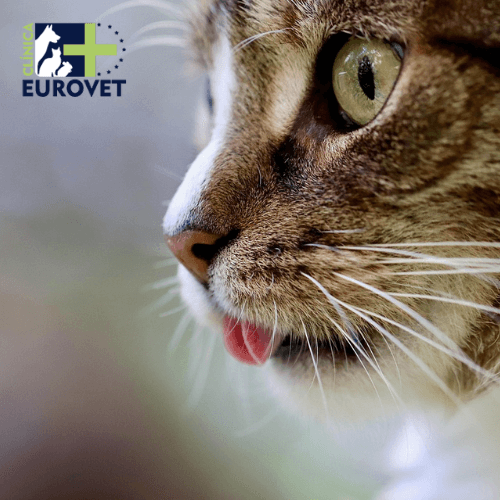
An early decision that makes a difference
It was in the 1970s and 1980s that sterilisation went from being considered a population control measure to being recognised as a preventive medicine tool, especially in felines. Even so, in contemporary feline veterinary medicine, sterilisation, and more specifically the castration of females, is not only considered a measure to prevent litters.
“Fewer pregnancies = fewer emergencies”… In cats, many emergencies do not arise from surgery, but from what prevents it: dystocia, foetal retention, postpartum metritis, mastitis… In terms of “preventive medicine”, sterilisation reduces the likelihood of entering this cycle. This procedure has a direct and very significant impact on breast health, emotional balance, quality of life and the prevention of chronic stress associated with heat. Large population studies have shown that spayed cats live, on average, between 30% and 40% longer than intact cats, a difference that cannot be explained by a single factor, but rather by the sum of multiple preventive benefits. Therefore, the feline approach is different from the canine approach and deserves its own analysis.
In practice, many problems that concern owners—intense meowing, night-time restlessness, attempts to escape or sudden changes in behaviour—can be clearly explained by the reproductive physiology of female cats and, therefore, have a well-defined preventive solution.
Spaying and neutering: clarifying concepts in female cats
From a technical point of view, sterilisation involves preventing reproduction without necessarily removing the ovaries, while castration involves the removal of the gonads, in this case the ovaries. Removing the ovaries eliminates the main source of oestrogen and progesterone, hormones that regulate a cat’s sexual cycle and have a decisive influence on her reproductive system and other sensitive tissues, such as the mammary gland.
Your vet advises 😺
The optimal age for neutering cats is usually before 5–8 months of age, as this almost completely reduces the risk of pyometra and mammary tumours in females.
In daily clinical practice, when we talk about “spaying” a cat, we are almost always referring to surgical castration, as this is the option that provides real long-term health benefits. Simply blocking fertility without removing the ovaries does not prevent heat or repeated hormonal stimulation, and therefore does not reduce the risk of hormone-dependent diseases, which are precisely the most relevant in this species.
In cats, the technique of choice is ovariectomy or ovariohysterectomy, procedures in which the ovaries are removed, with or without the uterus. Both techniques have the same objective: to suppress the hormonal cycle. In terms of clinical outcome, there are no significant differences in behaviour or in the prevention of hormone-dependent diseases between the two.
Other options that preserve the ovaries, such as tubal ligation, are of little interest in cats because they do not prevent heat or its consequences. From a practical point of view, this means that the cat would continue to vocalise intensely, be restless and experience repeated stress, as well as maintaining the risk of mammary pathologies.
Benefits of spaying/neutering female cats
Epidemiological data — Feline pyometra exists, but is rare
Although pyometra is a classic pathology in female dogs, retrospective studies show that its prevalence in female cats is much lower, accounting for less than 2–3% of gynaecological cases, which explains why the preventive approach in cats focuses much more on mammary oncology. 🔗 https://pubmed.ncbi.nlm.nih.gov/16678487/
Feline mammary tumours: the big preventive argument
In female cats, mammary tumours are one of the most serious neoplasms from a prognostic point of view. Unlike in female dogs, where around 50% of mammary tumours can be benign, in female cats it is estimated that between 80% and 90% of mammary tumours are malignant, with aggressive behaviour and a high capacity for invasion and metastasis.
The relationship between sex hormones and the development of feline mammary tumours is well established. Repeated exposure to oestrogen progressively increases the risk. Epidemiological data show that sterilisation performed before 6 months of age can reduce the risk of mammary tumours by approximately 90–91%, while sterilisation performed before the first year of life maintains a reduction of around 85–86%. As the cat accumulates heat cycles, this protective effect clearly diminishes.
From a clinical point of view, few preventive decisions in veterinary medicine have such a marked impact on reducing a potentially fatal cancer as early spaying of female cats. It is not a question of eliminating a theoretical risk, but of significantly reducing the probability of a serious disease with a poor prognosis.
Association between sterilisation and longevity
The database of more than 70,000 animals found that neutered animals lived longer than unneutered animals. In cats, the difference was even greater, with neutered males living up to 62% longer than their intact counterparts.
Source: https://www.humaneworld.org/en/resources/why-and-when-you-should-spay-or
Emotional well-being and behaviour
Heat in female cats is not a one-off event. It is a physiological state that can recur continuously during the breeding season, especially in domestic environments with artificial lighting. It has been reported that a female cat can go into heat every 2 to 3 weeks if she does not become pregnant, which means almost constant hormonal stimulation for months.
During these periods, intense vocalisations, marked restlessness, rolling around, characteristic postures and an active search for attention are common. From a medical point of view, this state is associated with chronic stress, sleep disturbances and increased excitability. Although some owners try environmental measures, such as increasing play or modifying routines, these strategies have a limited effect as long as the hormonal stimulus persists. Castration completely eliminates this physiological state, breaking the cycle of repetitive stress.
Hormonal stress also affects the immune system
Prolonged states of stress, such as repeated heat cycles, are associated with immune disorders, which can influence the body’s ability to control inflammatory and tumour processes.
After neutering, many cats exhibit more stable and predictable behaviour. The disappearance of the hormonal cycle is associated with a clear reduction in episodes of extreme restlessness and improved quality of rest. This effect does not imply a change in personality, but rather the disappearance of the hormonal component that amplifies certain behaviours.
From a practical point of view, this stability facilitates the application of environmental enrichment and mental stimulation measures, which are much more effective when the cat is not subjected to a state of constant hormonal activation.
Benefits for the family and cohabitation
Reduced risk of escape and elimination of the risk of pregnancy
Sterilisation completely eliminates the risk of unwanted litters, which is particularly relevant in the feline species, where a single cat can have several litters per year, with an average of 3 to 6 kittens per litter. It also significantly reduces escapes caused by heat, decreasing the risk of accidents, losses and conflicts with other animals.
From a practical point of view, prevention avoids unforeseen situations, both emotional and logistical, and allows for a more peaceful and responsible coexistence, based on anticipation rather than urgency.
Did you know?
Males can detect a female in heat from over 1 km away thanks to their extremely sensitive sense of smell, which explains why many dogs ‘run away’ when they smell a female in heat nearby.
From a population perspective, the sterilisation of female cats has a particularly significant global impact. It is estimated that a single unsterilised cat and her offspring can, under favourable conditions, produce tens of thousands of new individuals in just a few years, due to the high reproductive efficiency of the species. A cat can have 2 to 3 litters per year, with an average of 3 to 6 kittens per litter, and many of these kittens reach sexual maturity before their first year of life. Population control programmes based on systematic sterilisation have shown reductions of up to 30–50% in the number of homeless cats in urban areas in the medium term, as well as a clear decrease in admissions to shelters and euthanasia due to overpopulation. In addition, it contributes to public health by reducing the risk of zoonoses, i.e. the transmission of diseases that also affect humans, in human communities. Therefore, the sterilisation of female cats is not only an individual health decision, but also a key tool for veterinary public health and animal welfare.
Did you know?
Even using moderate assumptions — only two litters per year, four kittens per litter and a 50% juvenile survival rate — a single pair of unsterilised cats can produce around 120,000 cats in just 10 years. This growth is not gradual, but exponential: each new generation becomes a breeding generation in turn. Therefore, in feline population control, neutering a cat today prevents tens of thousands of births in the future.
Longevity and quality of life
Studies based on large clinical databases have found that spayed cats have a significantly longer life expectancy than intact cats, with average increases of around 39%. This difference is explained by the reduced risk of mammary tumours, the absence of repeated pregnancies, decreased chronic stress and a lower probability of escapes associated with oestrus, which in turn reduces the risk of accidents.
Beyond the number of years, the clinical goal is a life with fewer serious illnesses and fewer emergencies, which translates into a better overall quality of life.
Disadvantages and aspects to monitor after sterilisation
After spaying, a cat may experience changes in her metabolism and appetite regulation. Nutritional studies have shown that the energy requirements of spayed cats may decrease by around 10%, while spontaneous intake may increase if rations are not controlled. This combination explains why weight gain is one of the most common side effects. In a prospective study of young adult cats, after ovariohysterectomy, it was necessary to significantly restrict rations to prevent weight gain, and it was observed that intact cats tended to self-regulate while spayed cats tended to eat everything available (without clear changes in activity).
From a practical point of view, adjusting the diet in the weeks following the operation and encouraging daily play can prevent obesity in most cases. When action is taken early, weight control is usually simple and effective.
A decision that protects today and cares for the future
In cats, sterilisation is one of the most effective preventive decisions that can be made. It significantly reduces the risk of malignant mammary tumours, eliminates the stress associated with heat, improves emotional stability and contributes to a longer and more balanced life. Furthermore, sterilisation is not just a matter of behaviour or birth control: it contributes to public health by reducing the overpopulation of stray animals, which in turn lowers the risk of zoonosis in human communities. When accompanied by proper nutritional monitoring and regular check-ups, its benefits far outweigh any potential drawbacks.
Many veterinarians recommend sterilisation for female cats because, in this species, early prevention has a particularly high impact. Preventing aggressive breast cancer, eliminating repetitive hormonal stress and preventing unwanted litters are not theoretical hypotheses, but facts backed by decades of clinical observation and epidemiological studies. For this reason, early sterilisation in female cats is considered one of the most effective tools in preventive feline medicine.
Veterinary advice — The best time is not always ‘when the heat cycle is a nuisance’
From a medical point of view, waiting until heat becomes problematic is not ideal. The greatest preventive benefit is obtained before sexual maturity, even if the cat has not yet shown any noticeable behaviour.
Sources and recommended reading
Schneider, R., Dorn, C. R., Taylor, D. O. N. (1969) – Factors influencing mammary cancer development in dogs and cats. Journal of the National Cancer Institute. https://academic.oup.com/jnci/article-abstract/43/6/1249/910225
Overley, B., Shofer, F. S., Goldschmidt, M. H., Sherer, D., Sorenmo, K. U. (2005) – Association between ovariohysterectomy and feline mammary carcinoma. Journal of Veterinary Internal Medicine. https://pubmed.ncbi.nlm.nih.gov/16095174/
MSD Veterinary Manual – Mammary Tumours in Cats. https://www.msdvetmanual.com/reproductive-system/mammary-tumors-in-cats/mammary-tumors-in-cats
Banfield Pet Hospital (2013) – State of Pet Health Report: Spaying and neutering may contribute to longer lifespans. https://www.banfield.com/about-banfield/newsroom/press-releases/2013/spaying-and-neutering-may-contribute-to-longer-lifespans
Bermingham, E. N., Thomas, D. G., Morris, P. J., Hawthorne, A. J. (2010) – Energy requirements of adult cats. British Journal of Nutrition. https://www.cambridge.org/core/journals/british-journal-of-nutrition/article/energy-requirements-of-adult-cats/225A91E97C8B94CAB4A5BF0646EFA2A2
Leupolt, B., et al. (2021) – Prevalence and risk factors for urinary incontinence in bitches five years after ovariohysterectomy. – Arquivo Brasileiro de Medicina Veterinária e Zootecnia – Approximate prevalence 2.26% (1 year), 9.01% (3 years) and 11.27% (5 years). https://www.scielo.br/j/abmvz/a/qkDvZf3VqW7YK47x9dFgJnF/?format=html&lang=en
Royal Veterinary College (RVC) (2024) – New RVC research reveals later-age spaying of bitches reduces risk of urinary incontinence. – Epidemiological communication – Relative reduction of nearly 20% in the risk of early incontinence with later sterilisation in certain analyses. – https://www.rvc.ac.uk/vetcompass/news/new-rvc-research-reveals-later-age-spaying-of-bitches-reduces-risk-of-urinary-incontinence
Banfield Pet Hospital (2013) – Spaying and neutering may contribute to longer lifespans (State of Pet Health 2013). – Analysis of a large clinical database with average percentage increases in longevity in spayed/neutered animals. – https://www.banfield.com/about-banfield/newsroom/press-releases/2013/spaying-and-neutering-may-contribute-to-longer-lifespans
Bermingham, E. N., Thomas, D. G., Morris, P. J., Hawthorne, A. J. (2010) – Energy requirements of adult cats. – British Journal of Nutrition – Differences in energy requirements in sterilised cats (approx. 10.4% less). https://www.cambridge.org/core/journals/british-journal-of-nutrition/article/energy-requirements-of-adult-cats/225A91E97C8B94CAB4A5BF0646EFA2A2
Alexander, L. G., Salt, C., Thomas, G., Butterwick, R. (2011) – Effects of neutering on food intake, body weight and body composition in growing female kittens. – British Journal of Nutrition – Changes in food intake and weight differences after neutering in female kittens. – https://pubmed.ncbi.nlm.nih.gov/22005425/