- Clinica Veterinaria Eurovet - Avenida Estación, 38 - 12598 - Peñiscola
- +34 964 784 983
- +34 671 281 025
- clinica.eurovet@gmail.com



Diagnosing Arthritis in Pets: What to Look for When Age Starts to Show
Arthritis is one of the most common diseases in senior pets — and also one of the most underestimated. It doesn’t appear suddenly but creeps in little by little until your furry friend no longer runs, jumps, or climbs onto the sofa as before.
It is a chronic degenerative condition in which the joints begin to “complain.” The cartilage — that wonderful natural cushion preventing bone from rubbing against bone — wears down gradually. The result: every movement becomes less fluid, more rigid, painful, and sometimes even noisy, like an old door in need of oil.
A Minute of History
Arthritis was first described in 1886 by the British physician John Kent Spender under the term “osteoarthritis.” In veterinary medicine, systematic study only began in the 1960s.
For our dogs and cats, this means that ordinary activities such as jumping onto the sofa, chasing a ball, or climbing stairs become challenges. It’s important to understand that arthritis is not a life sentence of immobility — when diagnosed and treated early, it can be managed effectively.
What Happens Inside the Joint: The Arthritic Process Under the Microscope
Articular cartilage is a specialized tissue that works like a luxury carpet — soft, elastic, and perfect for absorbing impact. But in arthritis, this carpet begins to fray.
The cartilage is made up of chondrocytes (specialized cells), collagen fibers, and proteoglycans, whose main function is to reduce friction and absorb shock.
In arthritis, the balance between the synthesis and degradation of the extracellular matrix becomes disrupted. Chondrocytes, in response to microtrauma, excess weight, poor conformation, or aging, start producing degrading enzymes (metalloproteinases) and inflammatory mediators (such as prostaglandins and cytokines like interleukin-1β). The result is:
• Progressive cartilage loss, which becomes thinner and more brittle.
• Exposure of the subchondral bone, increasing pain during movement.
• Formation of osteophytes (small bony spurs) around the joint edges.
• Chronic synovial inflammation, which amplifies the process.
In simple terms, the affected joint enters a vicious circle where cartilage destruction triggers inflammation, and inflammation accelerates destruction.
Or, to put it metaphorically: it’s like a couple arguing — neither gives in, both raise their voices, and in the end, the joint suffers the most.
When Your Pet Starts Telling You Something Is Wrong
One of the biggest challenges with arthritis is that animals can’t tell us directly that something hurts. The signs therefore appear in their behavior and mobility. Many owners mistake them for normal aging, when in fact they’re signs of chronic pain.
A common sign is stiffness when getting up, especially after sleeping or long rest periods. You might also notice your pet moves more slowly or awkwardly, indicating joint discomfort.
Another frequent symptom is a loss of interest in play or walks — activities that once brought joy. There may also be changes in temperament, such as irritability or isolation — subtle but meaningful signals that something isn’t right.
Did You Know?
In cats, arthritis often goes unnoticed for years. They are masters at hiding pain. Owners may only notice small changes: they groom less, avoid climbing their favorite spots, or become more sedentary — as if they’d taken early retirement.
Many animals also begin licking or biting the affected joints repeatedly, instinctively trying to relieve the discomfort.
Many owners assume it’s “just age,” but in reality, it’s chronic pain. And pain — whatever its cause — must always be treated to ensure a good quality of life.
Diagnosis: From Suspicion to Certainty
Diagnosing arthritis is like putting together a puzzle combining medical history, physical examination, and imaging.
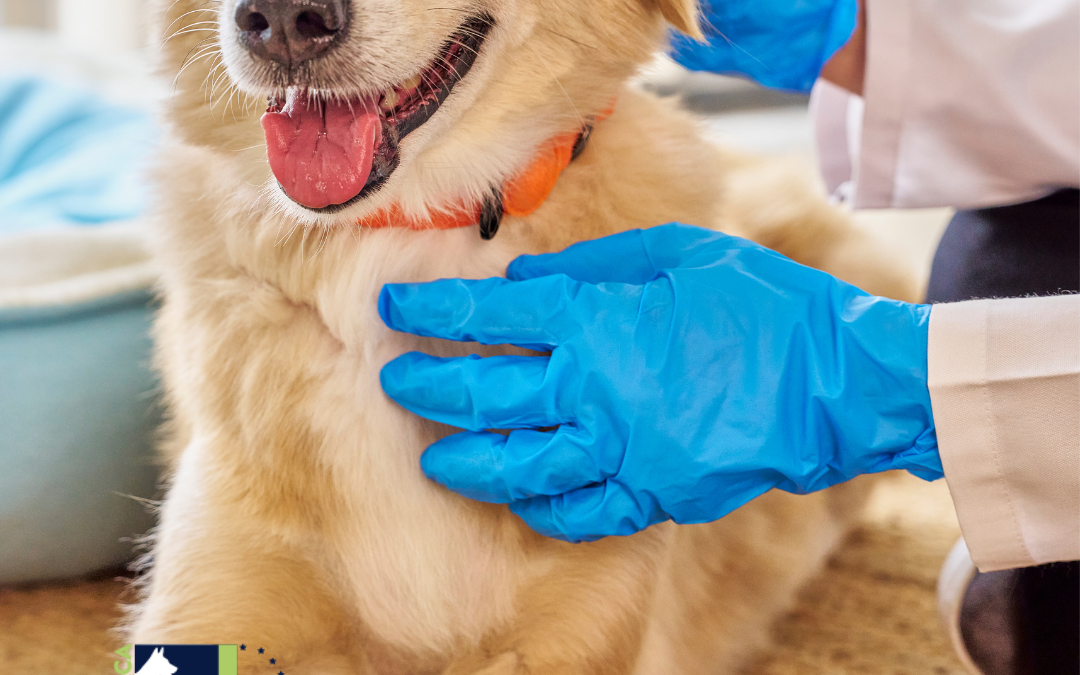
It starts with a thorough orthopedic exam: the veterinarian assesses range of motion, checks for pain during manipulation, observes posture and gait, and examines overall muscle condition. This clinical evaluation is essential to guide the next step — imaging.
X-rays remain the gold standard in diagnosis. They reveal joint changes and possible bone remodeling. They confirm the degree of cartilage wear, the presence of osteophytes, subchondral sclerosis, joint space narrowing, and deformities indicating advanced arthritis.
When clinical findings and X-rays don’t match, or when the affected joint plays a critical role (such as in the shoulder, spine, or elbow), more specific tests like MRI or CT scans may be used. These allow visualization of the cartilage, ligaments, and synovial membrane.
In most cases, however, a good clinical history and a well-interpreted X-ray are enough to make effective treatment decisions.
Did You Know?
Over 80% of dogs older than eight show radiographic signs of arthritis, even if they don’t outwardly appear to be in pain.