- Clinica Veterinaria Eurovet - Avenida Estación, 38 - 12598 - Peñiscola
- +34 964 784 983
- +34 671 281 025
- clinica.eurovet@gmail.com



Unwanted guests: protect your pet and your family!
Why intestinal parasites matter…
Intestinal parasites remain one of the most common reasons for veterinary consultations, especially in puppies and kittens, whose defences are still developing. The most worrying thing is that many of these organisms can remain hidden for weeks, multiplying and causing persistent diarrhoea, vomiting, anaemia, weight loss and, in the most severe cases, growth retardation and impact on the neurological and immune systems. A very effective way to reduce this risk from day one is to establish a simple routine: always pick up faeces during walks, frequently clean the areas where the animal sleeps and eats, and wash your hands thoroughly after handling the animal or its belongings, especially in homes with children.
Mini revelation
An animal with parasites may eat well and not have diarrhoea, but still lose weight. Worms act as silent nutrient thieves, stealing protein and energy before the body can use them.
The story does not end with animals: several species have zoonotic potential, meaning they can be transmitted to humans, especially children, the elderly, or immunocompromised individuals. Therefore, protecting your pet also means protecting your home. At Eurovet Veterinary Clinic (Peñíscola), we are committed to rigorous preventive medicine that curbs these risks before they arise, designing internal and external deworming plans tailored to each family’s lifestyle, with regular reminders so that no doses are missed. In fact, the European ESCCAP guidelines (2025) state that, in situations where individual risk cannot be properly assessed, a practical reference is to deworm or carry out coproparasitological checks at least four times a year (and more in high-risk animals). Caring is loving, and loving means preventing.
Transmission of intestinal parasites
Intestinal parasites are one of the most common (and often underdiagnosed) causes of digestive disorders in dogs and cats. And here’s a key fact: in real-world conditions, it is not uncommon for a significant proportion of infections to be detected in “apparently healthy” animals, because the elimination of diagnostic forms can be intermittent. Therefore, practical recommendations insist on repeating samples, since with a single stool analysis, “recovery” can be around 50%, and 2–3 samples greatly increase the probability of detection.
From a biological point of view, these organisms have developed highly effective infestation and survival techniques. Some adult helminths compete directly for ingested nutrients, while others attach themselves to the intestinal mucosa using specialised structures, causing mechanical lesions and persistent microhaemorrhages. Protozoa, for their part, alter the function of enterocytes and interfere with digestion and absorption processes. Chronic infestations have been shown to reduce protein and fat absorption by more than 15–20%, even in the absence of overt diarrhoea or obvious weight loss.
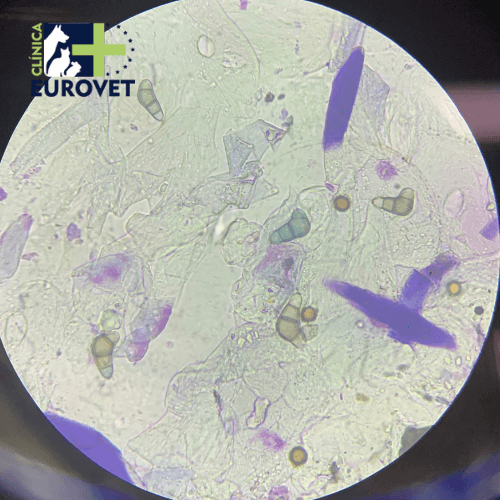
Did you know? “The egg is NOT dangerous when it is laid: it becomes dangerous over time.”
Toxocara eggs need 1 to 4 weeks in the environment to become infectious. This explains why cleaning up promptly and picking up faeces always breaks the cycle before the risk “matures”.
Source: https://www.cdc.gov/dpdx/toxocariasis/index.html
The intestine is one of the most immunologically active organs in the body, and the continued presence of parasites induces constant antigenic stimulation. This situation promotes low-grade chronic inflammation that may go unnoticed in clinical examinations but has a negative impact on general health, growth, coat quality and the body’s ability to respond effectively to vaccines or other infectious challenges.
At the pathophysiological level, persistent infestation leads to progressive alteration of the intestinal barrier. Partial destruction of enterocytes, increased intestinal permeability and alteration of tight junctions facilitate bacterial translocation and perpetuate a vicious inflammatory cycle. This disruption of intestinal balance promotes dysbiosis and can act as a trigger or aggravating factor for chronic digestive disorders.
From an immunological point of view, parasitic infections predominantly induce a Th2-type response, characterised by an increase in eosinophils, IgE and specific cytokines. Although this mechanism aims to limit the parasitic load, its prolonged activation can interfere with normal immune tolerance, promoting adverse reactions to food or exacerbating pre-existing allergic processes. In animals with recurrent digestive disorders, various studies have identified concomitant parasitic infections in up to 30% of cases, acting as a perpetuating factor in food allergies, inflammatory enteropathies, or malabsorption syndromes.
Did you know?
Fresh faeces are not always the greatest danger. Many parasites need days or weeks in the environment to become infectious, so a park or garden that appears clean today may become a silent source of infection later on.
Puppies, geriatric animals, and immunocompromised individuals are at a significantly higher risk of developing clinical complications. In these groups, the parasite load can result in growth retardation, anaemia, hypoproteinaemia, increased susceptibility to secondary infections and suboptimal vaccine responses, with a direct impact on well-being and quality of life. For all these reasons, understanding the infestation strategies and pathophysiology associated with helminths and protozoa is essential for an effective preventive and therapeutic approach in veterinary medicine.
Pathophysiology of parasitic damage
An intestinal parasite is not a passive occupant: it appropriates resources and causes continuous damage. Each species exercises its aggression differently, but they all benefit from the same evolutionary strategy: feeding without killing the host… at least not immediately. Understanding how these parasites cause damage is essential for interpreting the clinical signs we see in the clinic and for assessing the importance of treating them even if there are no obvious symptoms.
Mini revelation
An animal with parasites may eat with a normal appetite and not have diarrhoea, but still lose weight or muscle mass. Worms act as silent nutrient thieves, stealing protein and energy before the body can use them.
Helminths such as Toxocara or Trichuris damage the intestine through mechanical irritation and nutrient consumption. In the case of Ancylostoma and Uncinaria, the damage goes further: being haematophagous, they cause haemorrhages and anaemia. The presence of adult worms releases toxins and causes inflammation of the intestinal mucosa, reducing the absorption of vitamins, minerals and energy. Over time, the pet may show stunted growth, loss of muscle mass, poor coat quality and an increased predisposition to secondary diseases.
Some species have organ migration phases: Toxocara larvae damage the liver and lungs before reaching the intestine. In these cases, the parasite causes damage that manifests itself as coughing, sneezing, pneumonitis and even fever, confusing the owner about the real source of the problem. Protozoa such as Giardia and coccidia focus their destructive action on intestinal epithelial cells, disrupting the intestinal lining and damaging the protective mucosal barrier. Here is another useful piece of information to put this into context: a large review of faecal samples estimated a pooled prevalence of Giardia of 15.2% in dogs and 12% in cats (with variations depending on the diagnostic technique, with ELISA/IFA/PCR being more sensitive than simple microscopy). This explains why, in clinical practice, without an adequate diagnostic strategy, the problem can be “overlooked” or appear intermittent.
The most significant systemic consequence is a weakened immune response: an animal with parasites is more exposed to other pathogens, such as viruses or bacteria. In addition, chronic intestinal inflammation can create a vicious cycle in which the body expends more energy trying to repair damaged tissue than absorbing nutrients. In young animals, this imbalance can even affect neurological and cognitive development, making them more vulnerable to stress and disease for life.
The damage is not limited to the animal’s body: in the case of zoonotic parasites, the effects can be felt directly by the family. A human infection with migratory larvae, or giardiasis in young children, can cause stress, prolonged treatment and disruption to life with the pet if there is no adequate professional explanation.
At Eurovet, we explain it clearly: the damage caused by a parasite does not depend on whether or not it is visible in the faeces, but on what it is doing inside. Therefore, prevention and early detection are essential to ensure good long-term health. A well-designed deworming schedule, combined with regular clinical check-ups, stool analysis and good hygiene habits at home, makes these “unwanted guests” controllable and, in many cases, preventable.
Zoonoses and advice from Eurovet
When we talk about intestinal parasites, there is one point that changes the perspective: some do not stay “in the dog or cat”. They can affect the whole family, with particular importance for children, the elderly, immunocompromised individuals and, in the case of Toxoplasma, during pregnancy. Therefore, prevention is not just about “deworming”: it is about breaking the cycle in the animal, at home and in the environment.
Faeces: the easiest link to break.
Always picking up faeces in public places and frequently removing it from the garden drastically reduces reinfection and the risk to the family. Washing your hands after handling the animal or its belongings is a simple but crucial measure, especially in homes with children. In addition, Toxocara eggs are particularly “resistant”: they can survive for years in the soil, which reinforces the importance of environmental control and daily hygiene.
Fleas = risk of Dipylidium.
The presence of “rice grains” (proglottids) near the anus, in the bed or on the sofa is a typical sign. Proper control requires combining intestinal deworming with a rigorous flea control protocol for the animal and its environment (frequent vacuuming, washing blankets and beds at high temperatures, and ongoing flea treatments).
Water and humidity = breeding ground for Giardia.
Avoiding puddles, ditches and shared drinking troughs during outbreaks or suspected outbreaks, and reinforcing environmental hygiene is key. Washing textiles and utensils at 60 °C or higher helps to stop the problem persisting in the home.
Litter trays and pregnancy: responsible coexistence with cats.
Toxoplasma is not spread by petting cats, but by contact with cat faeces without proper hygiene or by contaminated food. The essential preventive detail is that oocysts need 1–5 days to become infectious in the environment; therefore, cleaning the litter tray daily (ideally by someone else during pregnancy, or with gloves) significantly reduces the risk, as health authorities remind us.
Personalised prevention (Eurovet)
At Eurovet Veterinary Clinic (Peñíscola), we approach this as preventive medicine: internal and external deworming plans tailored to lifestyle, with regular reminders so that doses are not missed. And when individual risk cannot be properly assessed, the European ESCCAP (2025) guidelines propose as a practical reference to deworm or perform coproparasitological checks at least 4 times a year, and more in high-risk animals.
Sources and recommended reading
European Scientific Counsel Companion Animal Parasites (ESCCAP) (2025) – Worm Control in Dogs and Cats – Guideline 01 (2025) – ESCCAP – European reference guide that establishes risk-based parasite control schemes and recommends, when risk cannot be accurately assessed, deworming or coproparasitological testing at least four times a year –
Garcia, L. S. (2017) – Practical Guidance for Clinical Microbiology Laboratories: Diagnosis of Intestinal Parasites – Clinical Microbiology Reviews (PMC) – Practical review demonstrating that a single coprological analysis can detect only about 50% of parasitic infections and that the analysis of 2–3 serial samples significantly increases diagnostic sensitivity –
https://pmc.ncbi.nlm.nih.gov/articles/PMC5740970/
MSD Veterinary Manual (continuously updated) – Parasitology in Veterinary Practice – MSD Veterinary Manual – Veterinary reference manual that describes the intermittent nature of egg and cyst shedding and recommends not ruling out parasitic infections based on a single negative faecal test –
Bouzid, M., Halai, K., Jeffreys, D., Hunter, P. R. (2015) – The prevalence of Giardia infection in dogs and cats: a systematic review and meta-analysis of prevalence studies from stool samples – Veterinary Parasitology – Meta-analysis estimating an average prevalence of 15.2% in dogs and 12% in cats, showing higher detection rates with immunological and molecular techniques compared to conventional microscopy –
https://www.sciencedirect.com/science/article/pii/S0304401714006451
Centres for Disease Control and Prevention (CDC) – DPDx – Toxoplasmosis – CDC – Official document detailing the biological cycle of Toxoplasma gondii and confirming that oocysts require between 1 and 5 days in the environment to become infectious, a key piece of information for prevention during pregnancy –
https://www.cdc.gov/dpdx/toxoplasmosis/index.html
Tyungu, D. L., McCormick, D., Lau, C. L. et al. (2020) – Toxocara species environmental contamination and human exposure: a systematic review and meta-analysis – PLOS Neglected Tropical Diseases (PMC) – Review documenting the high environmental resistance of Toxocara eggs, which are capable of surviving for years in the soil, highlighting the importance of faecal control and environmental hygiene –