- Clinica Veterinaria Eurovet - Avenida Estación, 38 - 12598 - Peñiscola
- +34 964 784 983
- +34 671 281 025
- clinica.eurovet@gmail.com



Scabies in pets without falling into traps
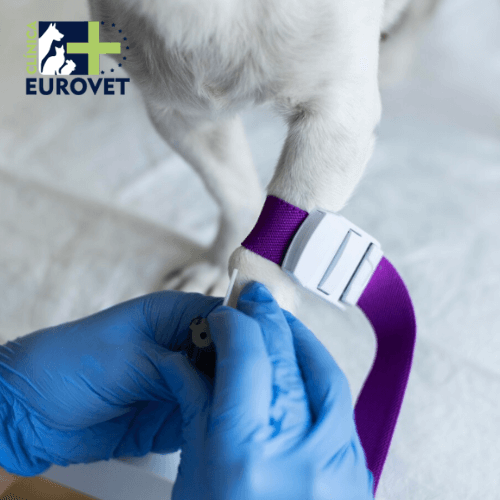
Clinical guide for accurate diagnosis in dermatology
Scabies is not a single disease, but rather a group of parasitic dermatoses caused by different types of microscopic mites that burrow into, colonise or proliferate on the skin of dogs and cats. They are highly contagious and are usually transmitted outdoors through contact with other infested animals. Very different prevalences have been reported depending on the environment; for example, regional studies have observed a much higher prevalence in free-roaming cats than in owned cats, which is logical: more contact means more exchange of mites.
Its clinical expression can range from simple localised hair loss to severe, widespread and deeply debilitating skin conditions. What makes scabies a real clinical challenge is not only its diversity, but also its extraordinary ability to mimic other dermatological diseases. In everyday practice, many owners first notice small, seemingly trivial changes: more frequent scratching, persistent licking in a specific area, or the appearance of an isolated scab. At this point, it is essential not to apply home remedies, medicated shampoos, or antiparasitic products at random, as these interventions can alter the appearance of the lesion and make subsequent diagnosis difficult. In some cases of sarcoptic mange, even when mites are not detected in a skin scraping, there are ELISA-based serological tests with sensitivities greater than 90% that can support the diagnosis when the clinical picture is consistent.
“The blood test that reveals ‘invisible’ mange”
A classic study evaluated a serological ELISA for sarcoptic mange in dogs (useful when the scraping does not find mites) and reported 92% sensitivity and 96% specificity in a large series of suspected dogs. In other words, sometimes the diagnosis relies more on immunology than on ‘seeing the bug’. In another study on ELISA for canine scabies, it was observed that antibodies can persist after clinical resolution. Practical translation: a serological test may continue to be positive for some time and must be interpreted in context (symptoms + evolution + treatment).
On a practical level, a simple and very useful method is to “play clinician at home” for 48–72 hours: note when the itching is worst, whether the pruritus wakes the animal at night, which areas it scratches most, whether there has been recent contact with other animals or changes in environment. This small, seemingly trivial home record can save weeks of aimless empirical treatment.
The result of not acting in an orderly manner is well known in the clinic: animals that have been suffering from persistent itching, changing skin lesions and unsuccessful treatments for weeks or even months. Even after correct treatment, some immunological markers may remain positive for a prolonged period, which explains why certain tests should not be interpreted in isolation, but always in relation to clinical evolution. Understanding how scabies manifests itself, what diseases it can be confused with, and what tests can detect it is essential to avoid clinical errors and unnecessary suffering 🐾.
It is also important to contextualise the relevance of the problem: in human medicine, scabies affects more than 200 million people at any given time and generates more than 400 million new cases per year according to WHO estimates, illustrating the extraordinary biological efficiency of these parasites when they encounter favourable conditions.
The universal language of scabies: the clinical triad that never lies
Although each type of mite has its own biological and clinical characteristics, there is a triad of signs that is so recurrent that it constitutes the cornerstone of the diagnostic suspicion.
The first is intense pruritus, a persistent itching that usually worsens at night. This phenomenon is explained by the nocturnal activity of the mites and the release of inflammatory mediators that stimulate the skin’s nerve endings. The animal scratches, bites or rubs itself insistently, sometimes even causing self-mutilation injuries. In certain cases, gently rubbing the edge of the ear can trigger an automatic scratching reflex with the hind limb, a clinical sign described with high specificity in sarcoptic mange and very useful as a guide in physical examination.
Your vet advises you: “the ‘it’s just his ear itching’ trap”.
Some types of scabies start as a “localised” itch (ears/elbows/belly) and look like a mild allergy. A practical tip is to take a photo with your mobile phone every 3-4 days: if the lesion spreads in circles, scabs appear or the itching comes in waves, it warrants immediate review. Photo monitoring = faster diagnosis.
At home, a simple but effective measure is to check the skin after episodes of scratching, parting the hair with your fingers to detect redness, micro-wounds or hot spots, and avoid using improvised Elizabethan collars without veterinary advice, as stress can intensify the itching.
The second element is alopecia, which can be localised, multifocal or symmetrical, and usually affects very characteristic areas such as the ears, muzzle, elbows, hocks, abdomen or periocular region. In veterinary dermatology, the distribution of lesions is a key diagnostic clue. Periodically photographing the affected areas, always with the same lighting and distance, allows for objective assessment of the evolution and provides valuable information during clinical follow-up.
The third component consists of secondary skin lesions: scabs, scales, skin thickening (lichenification) and hyperpigmentation. In chronic phases, the skin may become dark, thick and inelastic, reflecting ongoing inflammation. It is common to make the mistake of increasing the frequency of bathing: without veterinary guidance, repeated washing can further damage the skin’s barrier function.
In demodectic mange, when Demodex proliferates pathologically, bacterial superinfections with purulent secretions and a foul odour are common. This condition is not only a consequence of the environment: it has been shown that certain dogs have an immunogenetic predisposition, associated with variants of the DLA system, which conditions an ineffective response to the mite, especially in generalised juvenile demodicosis.
In other mites, such as Cheyletiella, flaking can become so noticeable that it looks like ‘moving dandruff’, a phenomenon that gave rise to the popular term ‘walking dandruff‘, a clinical observation that continues to be surprisingly useful in consultations.
Dermatological curiosity – “Dandruff that walks… literally”
The nickname “walking dandruff” is not poetic: the appearance of “moving dandruff” is due to the mites stirring up epidermal debris as they move around. When a guardian sees this, they often think of “fungus” or “dry skin,” and that’s where Cheyletiella laughs quietly.
Great imposters: diseases that masquerade as scabies
The skin has a limited repertoire of responses to aggression: it becomes inflamed, itchy, loses hair and becomes infected. Therefore, many different diseases can clinically resemble scabies, especially in the early stages.
One of the most common confusions is with flea bite allergic dermatitis (FAD), where the itching is concentrated in the lumbosacral region. Dermatophytosis or ringworm causes circular lesions with peripheral scaling and requires specific environmental hygiene measures.
In cats, otodectic mange can go unnoticed for weeks if the itching is limited to the ear canal. Epidemiological studies have shown that Otodectes cynotis can even appear in indoor cats with no apparent contact with other animals, which means that this mite should not be ruled out based on lifestyle criteria. In addition, the parasite load can vary greatly between individuals, from a few mites to dozens per ear, explaining the wide clinical heterogeneity observed. In a study of kittens, the prevalence of Otodectes cynotis was 14.02%, and the parasite load in infected cats ranged from 7 to 85 mites per cat (with a high average intensity). This figure helps to explain why some cases cause explosive otitis and others show hardly any signs.
Useful clinical information – Otodectes can even appear in indoor cats
An epidemiological study noted that Otodectes cynotis is widely distributed and can even appear in indoor cats with no obvious contact with other animals, which means that the mite should not be ruled out simply because the cat “lives indoors”.
In other contexts, scabies is confused with superficial pyoderma. The classic mistake is to treat only the bacterial infection without looking for the underlying cause. Here, the history of recent contacts — nurseries, residences, parks, cat colonies — can be as revealing as physical examination, a point repeatedly emphasised in parasitological guidelines.
It is not uncommon for several pathologies to coexist in the same animal. Scabies can promote a secondary allergy, a bacterial infection, or coexist with endocrine problems. Clinical experience teaches a constant lesson: appearance is never a substitute for diagnostic tests.
The art of diagnosis: seeing the invisible
Confirming scabies is not an act of faith, but a methodical process. Deep skin scraping remains the gold standard technique for detecting mites such as Demodex, although its sensitivity varies depending on the mite and its stage of development.
In sarcoptic mange, false negatives are common: various studies indicate that only 20% to 50% of scrapings are positive. This limitation has prompted the use of complementary techniques such as PCR or serology, and explains why a negative scraping does not rule out the disease.
In recent years, modern systemic treatments have transformed clinical management. Various trials have shown that certain acaricidal molecules can completely eliminate mites after a single administration, with progressive clinical resolution in a few weeks, drastically reducing failures due to non-compliance with treatment.
When clinical suspicion is high and direct tests do not confirm the diagnosis, therapeutic testing remains a valid tool, provided it is interpreted rigorously. During this period, the guardian’s involvement is crucial: respecting doses and frequency, controlling the environment, washing textiles in close contact and following the plan for cohabiting animals prevents the phenomenon of “ping-pong” reinfestation.
It should be remembered that the term “scabies” does not define a single entity, but rather a set of cutaneous acariosis with different biological behaviours, an idea that has been included for decades in classic veterinary dermatology manuals. Regular monitoring and fluid communication with the veterinarian make the guardian an indispensable ally for therapeutic success.
Historical fact
The term Demodex comes from Greek (demos = people, dex = worm), a linguistic reminder that these mites are part of the normal “micro-world” of the skin… until, due to immunity, genetics or disease, they cease to be discreet and become protagonists.
Source: https://www.msdvetmanual.com/integumentary-system/demodicosis/demodicosis-in-dogs-and-cats
Sources and recommended reading
World Health Organisation (2023) – Scabies. – World Health Organisation, Fact Sheets – Official document estimating that more than 200 million people are affected at any given time and more than 400 million cases occur each year, illustrating the enormous epidemiological efficiency of the parasite – https://www.who.int/news-room/fact-sheets/detail/scabies
Ständer, S., Yosipovitch, G., Metz, M., et al. (2021) – Itch in Scabies: What Do We Know? – Frontiers in Medicine – Clinical review describing the pathophysiology of pruritus in human scabies and documenting the nocturnal worsening of itching in up to 80% of patients – https://pmc.ncbi.nlm.nih.gov/articles/PMC7882483/
Fondati, A., Scarampella, F., Baroni, M., et al. (2010) – Prevalence of Demodex canis–positive healthy dogs at trichoscopic examination (Prevalence of Demodex canis in clinically healthy dogs). – Veterinary Dermatology – Study demonstrating that the presence of Demodex canis in healthy dogs should not exceed 5.4% (95% CI), reinforcing the pathological value of its finding in animals with lesions – https://pubmed.ncbi.nlm.nih.gov/19706007/
Nwufoh, O. C., Ogbaje, C. I., Abdulkadir, A., et al. (2021) – Molecular detection and characterisation of Sarcoptes scabiei var. canis in dogs. – Veterinary Parasitology – Study comparing diagnostic methods and showing an approximate sensitivity of 69.44% using skin scraping versus 88.88% using skin biopsy – https://pubmed.ncbi.nlm.nih.gov/33746412/
Dumitrache, M. O., Ioniță, M., Mitrea, I. L., et al. (2023) – The most effective systemic treatment in dogs with sarcoptic mange. – Pathogens – Clinical review highlighting the low sensitivity of skin scraping, with positivity rates of only 20–50% in infested dogs – https://pmc.ncbi.nlm.nih.gov/articles/PMC10552383/
Veterinary Information Network (VIN) (2023) – An Overview of Sarcoptic Mange (Scabies) in Dogs. – Veterinary Partner / VIN – Practical clinical review emphasising the importance of differential diagnosis and frequent use of therapeutic testing in the face of negative scrapings – https://veterinarypartner.vin.com/doc/?id=4951492&pid=19239